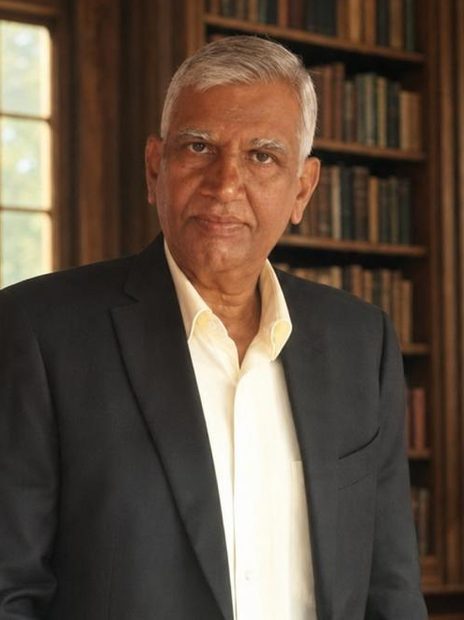
Professor Jai Singh Yadav
A scholar-practitioner whose career bridges South Asian and Southeast Asian intellectual traditions — three decades of teaching and research across India and Indonesia, and, since 2007, a working farm in East Java.
Between Two Archipelagos of Learning
Born in 1953 in Gorakhpur, in eastern Uttar Pradesh, Professor Jai Singh Yadav has spent a lifetime moving between two intellectual worlds — and has ended it, so far, in a field.
He took his M.A. in Geography from Gorakhpur University in 1974 and taught at a postgraduate college affiliated to the same university from 1974 to 1982. A UGC Teachers’ Fellowship (1982–1986) then took him to the School of International Studies at Jawaharlal Nehru University, New Delhi, where he completed the M.Phil. programme with distinction, at a CGPA of 8.4.
His scholarly path turned transnational with the Dharma Siswa Scholarship of the Ministry of Education and Culture, Republic of Indonesia (1984–1987), under which he completed an Advanced Diploma in Indonesian Language at the Faculty of Letters, University of Indonesia, Jakarta. He went on to serve as Research Fellow in the Department of History at Gadjah Mada University, Yogyakarta (1987–1990), and thereafter as Visiting Associate Professor for Indian Studies at the same faculty (1990–1996), an appointment made by the Indian Council for Cultural Relations. He continued at Gadjah Mada as Visiting Professor in History, International Relations and Political Geography from 1996 to 2006. In recognition of those long-standing ties, he became an Indonesian citizen in June 2001.
A prolific writer since 1987, Professor Yadav has published widely in daily newspapers, magazines and research journals on Indonesian history, military affairs and culture. His commentary and research have appeared in leading Indonesian and international outlets, among them Kompas and The Jakarta Post, contributing to public debate and scholarly exchange across languages and disciplines. Across these appointments and publications he has advanced comparative perspectives on history, geopolitics and interregional exchange, drawing on a deep linguistic and cultural fluency in both the Indian and the Indonesian context.
Since 2007 he has translated those scholarly commitments into hands-on practice. A son of farmers, he cultivates millets and specialises in Rudraksha cultivation in East Java, championing agroecological methods that restore soil health, enhance biodiversity and support food sovereignty. His work is a synthesis of rigorous scholarship, cross-cultural engagement and ecological stewardship — aimed at resilient rural livelihoods and at an informed, humane policy discourse.
A Career in Sequence
From a Gorakhpur classroom to a Yogyakarta faculty, and from the faculty to the field.
M.A. in Geography, Gorakhpur University
Completed his master’s degree in the city of his birth, in eastern Uttar Pradesh.
Lecturer, postgraduate college
Eight years teaching at a postgraduate college affiliated to Gorakhpur University.
UGC Teachers’ Fellowship — JNU, New Delhi
Advanced study at the School of International Studies, Jawaharlal Nehru University, completing the M.Phil. programme with distinction at a CGPA of 8.4.
Dharma Siswa Scholarship — Jakarta
Awarded by the Ministry of Education and Culture, Republic of Indonesia. Completed an Advanced Diploma in Indonesian Language at the Faculty of Letters, University of Indonesia.
Begins writing for the press
The start of a long body of commentary and research in daily newspapers, magazines and journals — including Kompas and The Jakarta Post.
Research Fellow — Gadjah Mada University
Department of History, Faculty of Letters, Yogyakarta.
Visiting Associate Professor for Indian Studies
Appointed by the Indian Council for Cultural Relations to the same faculty at Gadjah Mada University.
Visiting Professor — Gadjah Mada University
A decade teaching History, International Relations and Political Geography.
Indonesian citizenship
Granted in June 2001, in recognition of his long-standing ties to the country.
To the farm
Turned to regenerative and organic agriculture in East Java — millets, and a specialisation in Rudraksha cultivation.
Areas of Work
- Indonesian history — researched and taught from within the Indonesian academy for nearly two decades
- International relations and political geography — taught at Gadjah Mada University, Yogyakarta
- Indian Studies abroad — the ICCR chair for Indian Studies, held for six years
- Military affairs and culture — a recurring subject of his journalism and journal writing
- Interregional exchange — comparative perspectives on India and Southeast Asia, grounded in fluency in both languages
Published In
The Field, Since 2007
A son of farmers, Professor Yadav returned to the land after his teaching years — not as a retirement, but as the applied half of the same enquiry.
- Millets — cultivated as a resilient, low-input staple
- Rudraksha — a specialisation, grown in East Java
- Soil health — agroecological methods that rebuild rather than deplete
- Biodiversity — farming systems that make room for more than one crop
- Food sovereignty — the case for communities feeding themselves
What He Brings
A rare combination for a policy conversation: the historian’s long view, the geographer’s sense of place, and the farmer’s knowledge of what actually grows.
Scholarship That Went Back to the Soil.
As an Advisor, Professor Yadav brings the Initiative a working bridge between India and Southeast Asia — three decades inside the Indonesian academy, and two more spent proving in the field what he argued in the seminar room.